Abby Duke
St. Petersburg, Fla.— Down the banks of the Indian River Lagoon, through the mangrove limbs and sandbanks the warm waters next to the power plant attracted herds of grass-eating sea cows. As these manatees search for the seagrass meadows, they run the risk of starvation as there is less vegetation to feed from.
In estuaries across Florida, more noticeably the Indian River Lagoon, manatees have suffered a loss in resources as seagrass has depleted. Algal blooms along with an over-abundance of nutrients have severely affected the ecosystem.
The loss of over 90% of seagrass biomass has been confirmed within the Indian River Lagoon. This damage is a result of excess nitrogen and phosphorus in the waterways causing algae to accumulate faster than the ecosystem can combat, based on data from Save the Manatee Club.
“Seagrass meadows are critical to our ecosystem, and many do not know they are among the most threatened habitats,” said Professor Susan Bell, who specializes in ecology, evolution, and marine biology at the University of South Florida. “The threat to our manatee population begins with the issues of seagrass die-off.”
Manatees are a large part of Florida’s aquatic habitats as they control the invasive plant species and clear the waterways naturally, which helps in creating more efficient photosynthesis. This natural cycle then aids the overabundance of nutrients and algal blooms that occur within Florida’s waters.
Extensive damage to the seagrass meadows affects not only the manatees. Fisheries, coastal erosion, and water quality all benefit from seagrass beds thriving and regenerating according to Bell.
A recent study on the long-term performance of seagrass restoration projects within Florida found it a common management tool for recovering the ecological functions and services lost due to habitat fragmentation and degradation.
“By analyzing these meadows we can understand the different species of seagrass and the type of mitigation needed to restore it,” said Bell.
The goal of restoration within seagrass meadows is resilience to normal environmental stresses and the ability to survive through human interference. In return, the restoration of these habitats will abundantly feed the wildlife in hopes manatee mortality rate will subside as their food source is revitalized.
With an increase in seagrass mitigation, it does take time to monitor the regeneration of the plants. Through transplant and sediment modification sites, along with environmental processes such as wind speed, light abundance, and water quality, the quality of seagrass beds will see an improvement over time.
However, the looming question remains as to whether Florida’s “sea cows” will be returned to the endangered species list. Within the past three years, manatees have suffered a decline in population from the depleting resources available to them, causing concern within groups such as Save the Manatees and the Florida Fish and Wildlife Conservation Commission.
From December 2020 to December 2022, there have been 2,000 manatee deaths in Florida. This number demanded an immediate response, initiating an Unusual Mortality Event (UME) from the U.S. Fish and Wildlife Service.
“Manatees are essential within our waterways, this number of deaths sent a lot of conservation groups into panic mode,” said Save the Manatee Club manatee biologist, Tiare Fridrich. “There’s a big unknown as to when we will see the population back to normal.”
The manatee mortality rate has skyrocketed from pollutants entering their ecosystems killing off their main food source, now resulting in an abundant number of manatees dying from starvation.
According to Fridrich, starvation among manatees remains the leading cause behind the death toll spiking. The seagrass within the coastal and inland waterways of Florida is unable to regenerate with mounting pollution and unfavorable water conditions, causing manatees to find new sources of food.
“Without a source of food, our manatees are having to travel long distances to find it, which leads to them dying because seagrass is limited across Florida,” said Fridrich.
As manatees travel for a food source, they risk dying from cold water temperatures. According to Fridrich, the malnourished manatees found floating atop the water are the subjects of starvation as they were unsuccessful in finding vegetation.
The untimely deaths of these sea cows pushed government agencies to re-consider manatees for the endangered species list, as the manatee mortality number for 2022 was above the 5-year average according to the FWC’s data.
“It took a massive die-off event to get manatees back in the running for the list, although they shouldn’t have been down-listed at all,” said Fridrich.
Although the number of manatee deaths is alarming, groups such as Save the Manatees Club give light to a dark truth. Manatees’ mortality rate will slowly improve as seagrass restoration is underway, along with the efforts from the public to help keep manatees safe.
Save The Manatee Club executive director, and aquatic biologist Patrick Rose spends the majority of his time gathering research and educating others on the rehabilitation of the manatee population. “It is important to start at the basics, educating on the importance of wake zones and propeller scarring to prevent manatee deaths will help when it comes time to regenerate the seagrass meadows,” said Rose.
A push for regulatory action is also underway to help save Florida’s manatees. Through the FWC’s Manatee Rescue and Rehabilitation Partnership (MRP), several agencies and organizations are working together to combat manatee deaths and rehabilitate the sick or injured.
“It is critical to manatee survival that everyone do their part in protecting them, the biggest help to the MRP is when the public reaches out over a manatee in distress that needs our attention,” said the director of FWC’s Habitat and Species Conservation division, Lisa Thompson.
Florida residents can also do their part in revitalizing the manatee population along with the seagrass beds by taking action within the environment. Attention to seagrass beds while on the water is the best way to avoid boating over them, if not, scarring to the grass can cause die-off.
To help reduce nutrient pollution and harmful algal blooms, residents can fertilize less or not at all as watershed into rivers, lakes, or other waterways can be detrimental to the overall health of seagrass beds according to Rose.
Through education of manatee and seagrass meadow protection, the future for these creatures and their habitat are hopeful. With an increase in conservation efforts among residents and organizations alike, Florida’s aquatic ecosystem has an increased chance of surviving the mounting issues that face it.

Weeki Wachee Springs mid-summer
Photo by: Abby Duke
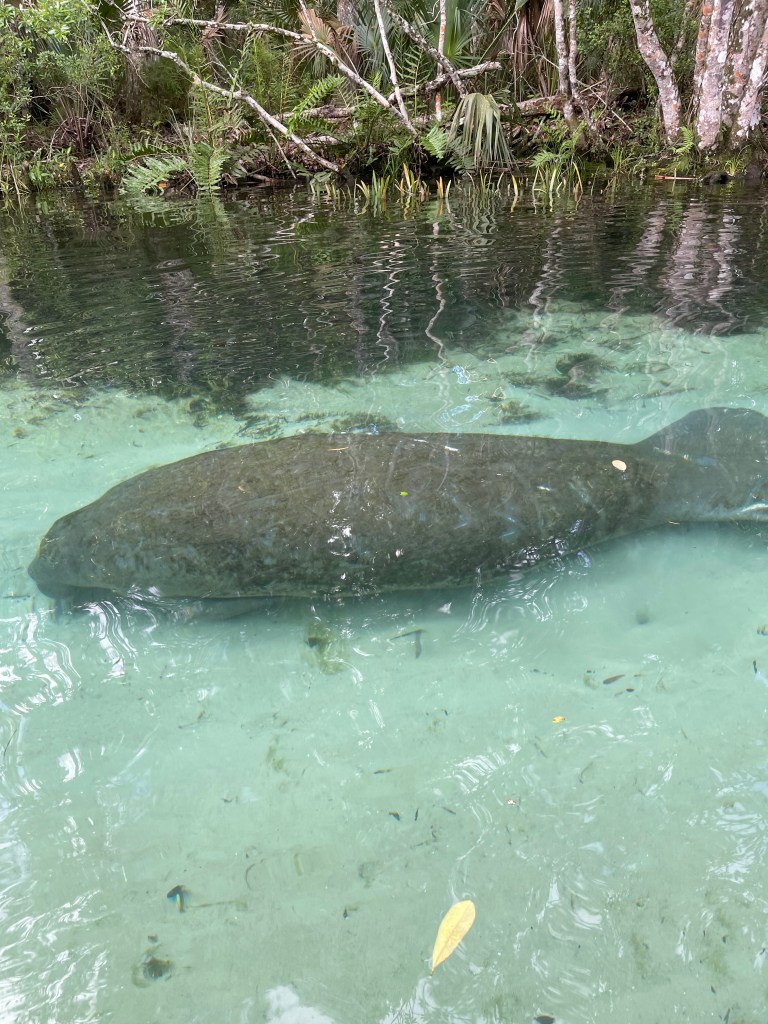
Florida’s ‘Sea Cow’
Photo By: Abby Duke
 L&L Content Creation
Leave a comment